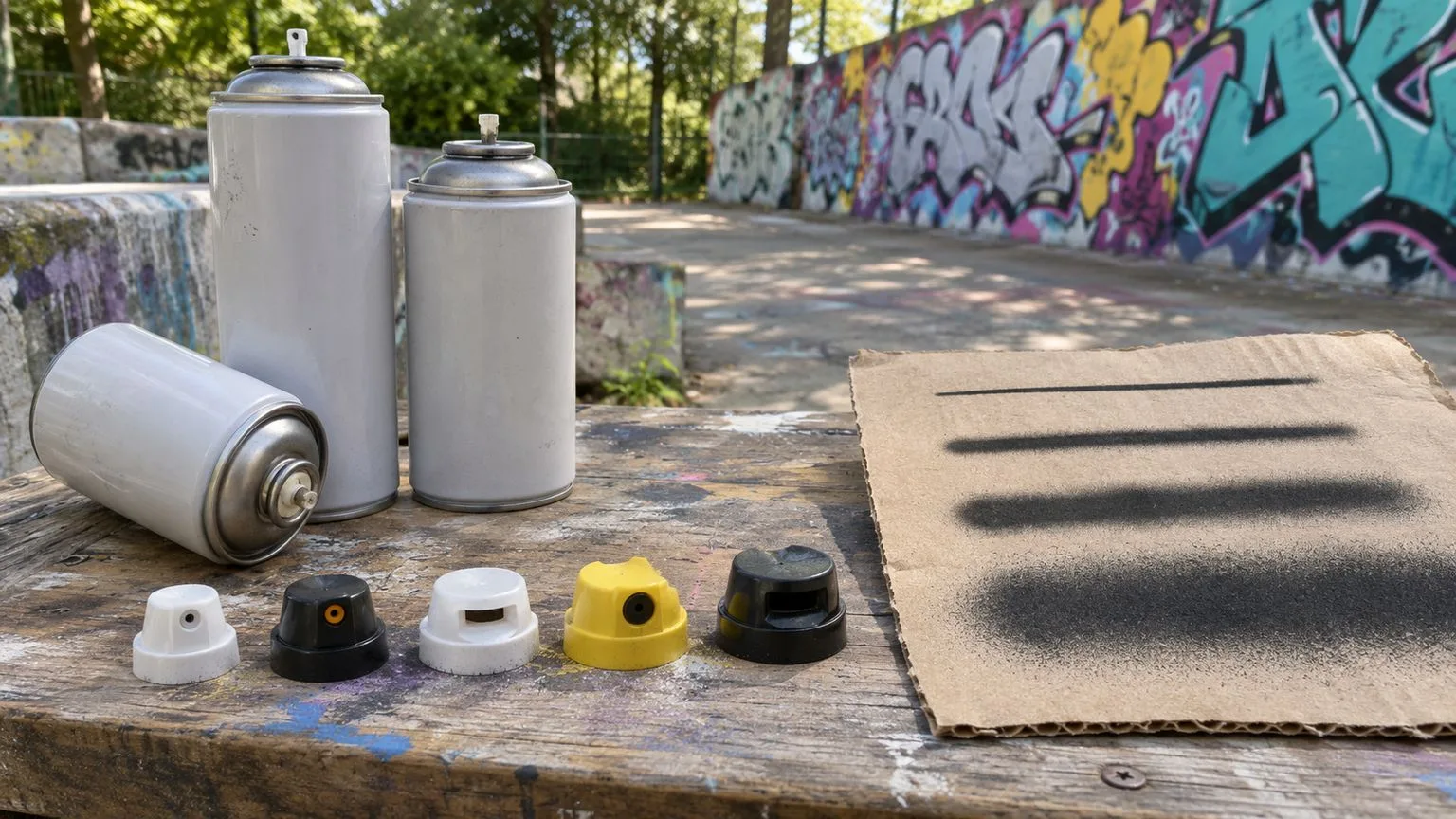
Spray paint caps shape how paint leaves a can. Changing the cap can change spray width, edge softness, paint output and how quickly a pass builds coverage, but it does not work independently of the can, distance, speed or surface. Treat a cap as one part of a tool combination. Test that combination on cardboard or a permitted test panel before using it for a fill, outline or detail on a legal wall.
What a cap does
Pressing the cap opens the valve and directs paint through its nozzle. The nozzle geometry influences the pattern: a narrow concentrated mark, a broader round spray or a wider band with softer edges. The result you see on the wall also depends on how much paint the can supplies and how far the spray travels before it reaches the surface.
A cap description is therefore a starting category, not a guaranteed line measurement. The same cap can make a tighter, wetter mark when held close and a wider, softer mark farther away. Moving slowly builds more paint; moving quickly makes a lighter pass. Rough walls break the edge differently from smooth cardboard.
Test the actual cap-and-can pair you will use. A good test answers practical questions: how wide is the useful center of the spray, how soft is the overspray, and how fast can you move before coverage breaks?
Skinny, medium and fat caps
A skinny cap produces a relatively narrow pattern and lower apparent coverage per pass. It suits small details, thin internal lines and controlled corrections when the can pressure is compatible. A narrow cap is not automatically sharp: holding it too far away can still create a fuzzy edge, while working too close and slowly can make a wet line.
A medium cap is the general-purpose option. Its pattern is broad enough for efficient outlines and smaller fills but controlled enough for common letter edges. Beginners often find it easier to learn consistent distance and speed with a medium pattern before switching tools for every segment.
A fat cap produces a broad pattern and can move more paint across a large area. It is useful for fills, backgrounds and wide effects. The larger pattern demands space: near a letter edge it can overspray into a counter or outside the sketch. Keep it for areas where coverage matters more than a narrow boundary, then use the outline or a cut-back to define the final edge.
These names describe relative behavior, not one fixed standard. Two generic caps sold as the same type may feel different, and wear or dried paint can alter the pattern. Keep test results with the tool rather than assuming color alone identifies it.
Low and high pressure cans
Can pressure changes the result even when the cap stays the same. A lower-pressure can tends to deliver paint more gently, which can make close control easier and reduce the amount released during a short press. It may require a slower pass or more overlap for a fill.
A higher-pressure can pushes more material through the cap and can produce a stronger, broader-feeling spray. It helps cover larger areas quickly, but it can magnify overspray, bounce and endpoint dots. A skinny cap on a high-pressure can may not behave like a low-output detail tool; a fat cap can become very demanding near edges.
Pressure also changes as the can is used and with temperature, so yesterday's test is not a permanent calibration. Do not heat a can or use it outside the conditions stated on its safety instructions. If the pattern changes unexpectedly, return to a test panel before compensating with extreme distance or speed.
Testing a cap
Use a large piece of cardboard or a permitted test panel in a well-ventilated area. Shake and prepare the can according to its instructions, fit the cap securely, and protect the ground. Hold the can upright and choose one repeatable starting distance.
Make three horizontal passes of equal length: one at a steady moderate speed, one faster and one slower. Label them afterward only if needed; do not interrupt the test to write beside wet paint. Compare the solid center, edge softness, drips and overspray. Then repeat at a second fixed distance while keeping speed as similar as possible. Changing one variable makes the difference readable.
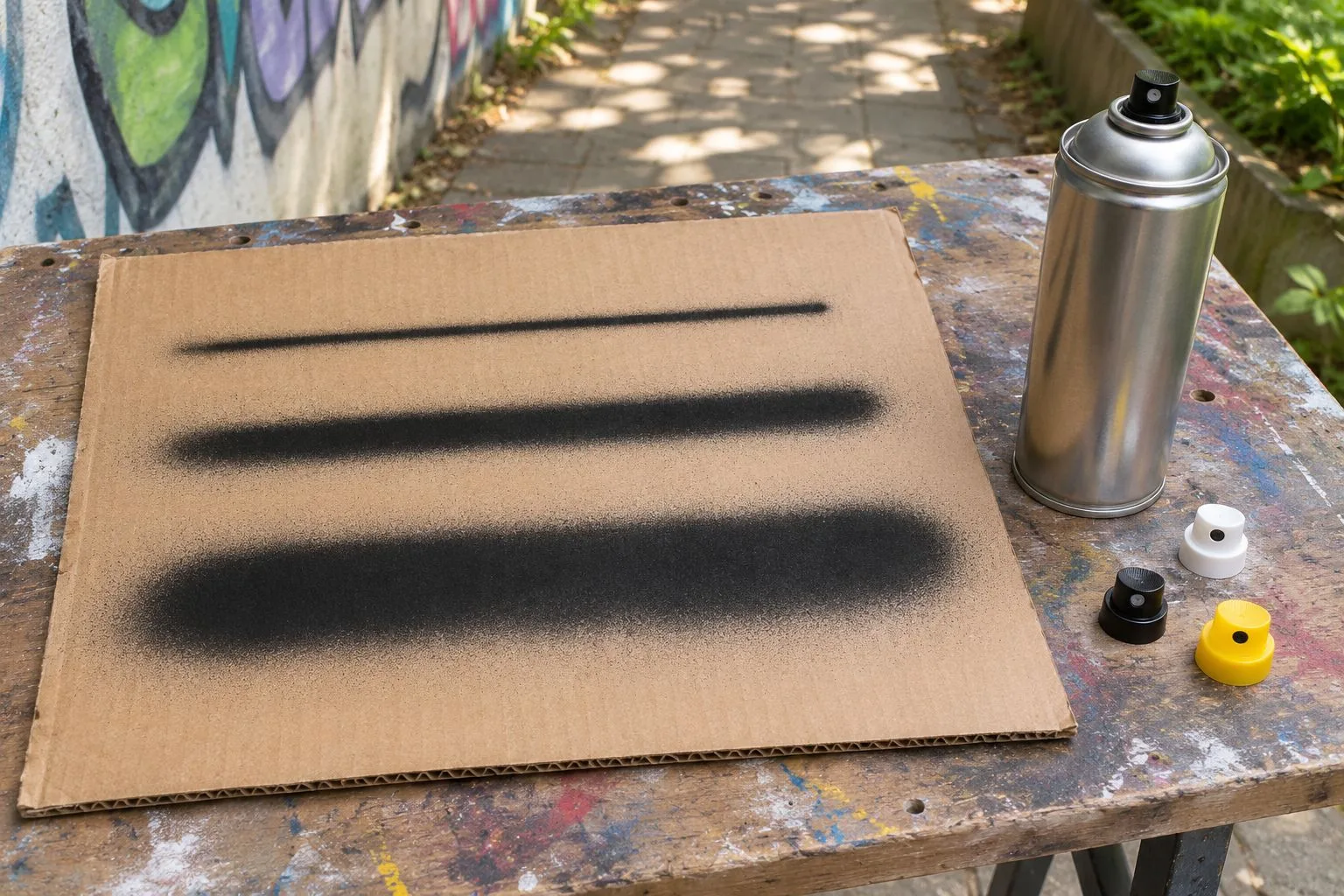
For a direct cap comparison, use the same can and make one pass per cap at the same distance and speed. For a pressure comparison, keep the cap type and method the same while changing the can. The widths are observations for that setup, not universal specifications. Photograph the panel if you want a reference for the session.
Before a piece, test the cap intended for the fill, the outline and any small detail. The simple two-color approach in how to draw a graffiti throw-up is a useful place to notice how a broad fill pattern and controlled outline pattern divide the work.
Care and safety
A cap that spits, sprays sideways or stops may contain dried paint. Move away from the artwork before testing it. Remove the cap with the can pointed away from people, wipe external paint with appropriate protection, and replace it with a known clear cap if necessary. Do not put your face over the nozzle or probe a pressurized valve. Follow the can's instructions for clearing after use; if they permit a brief inverted clearing spray, do it only in the ventilated test area and stop when the discharge clears.
Store dry caps separately from dirty or uncertain ones. A small container can keep skinny, medium and fat types organized without relying on brand labels. Dispose of damaged caps and empty cans according to local rules rather than leaving them at a wall.
Spray outdoors or with ventilation designed for paint vapors and overspray. Wear a properly fitted mask or respirator suitable for the product and task, plus eye and skin protection as directed by the product safety information. A dust mask alone may not address vapors. Keep other people out of the spray path.
Use caps only where painting is allowed. Check the current rules through the legal graffiti spots guide, protect the ground and remove every cap and can. The overview of graffiti styles may change the marks you want, but the test-first habit stays the same.