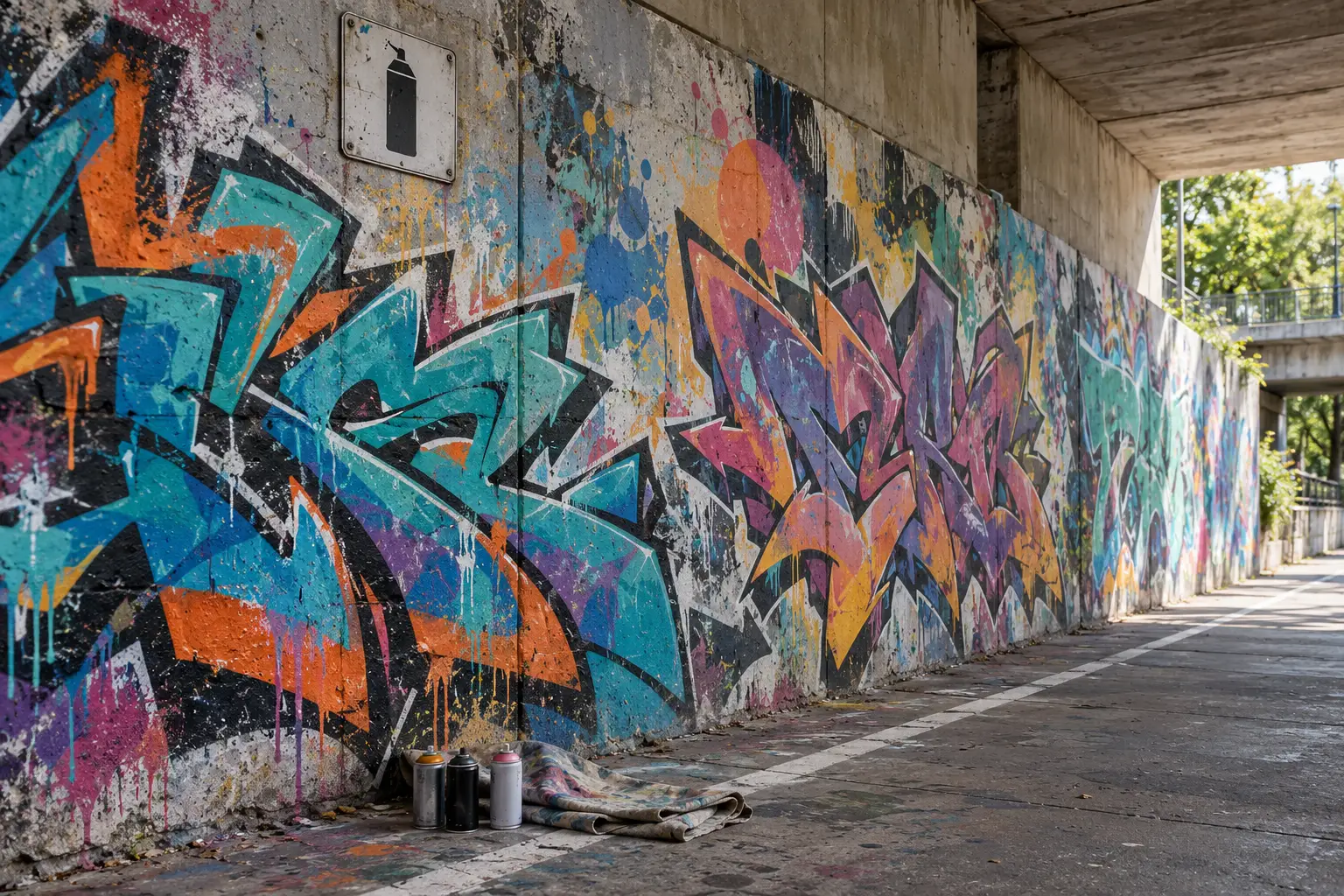
People ask "where is graffiti legal?" as if the answer were a list of countries. It is not. Legal painting depends on who controls a surface and what they allow, so the answer is found wall by wall. This article explains the rule that works everywhere, the forms permission takes and four official examples.
The short answer: legality follows permission
Graffiti is legal where the person or authority controlling the exact surface allows it, and where the painter follows the conditions attached to that permission. Without permission, marking somebody else's property is generally treated as property damage or another form of unauthorized marking, even when the work is careful, ambitious, or welcomed by passers-by.
This article is general information, not legal advice. Local law and the current instructions of the owner or operator always take priority.
The important word is exact. Permission to paint one wall does not normally extend to the neighboring door, fence, pavement, bridge support, utility box, or back of the same structure. A public wall is not automatically a public canvas, either. It may be controlled by a city department, transport operator, utility, school, housing body, or another organization with its own approval process.
Legality is therefore not a style or a visual category. The same lettering could be legal on a commissioned shop shutter, legal only during a booked session at a practice wall, and unauthorized on the building beside it. Existing graffiti does not change that distinction. It may show that people paint there, but it does not prove that the current owner permits them to do so.
That basic rule travels well: start with the surface, identify who controls it, and look for clear authorization. What changes from place to place is the form that authorization takes and the additional rules wrapped around it.
The main places where graffiti can be legal
Legal painting opportunities tend to fall into a few recognizable patterns. Their labels vary, but the practical difference is how permission is granted.
- Designated open walls allow painting on a clearly marked surface without asking for individual approval each time. Posted boundaries, opening hours, content rules, and cleanup requirements still apply.
- Bookable practice walls require a reservation or application. Approval may cover named painters, a particular panel, and a limited date or time window.
- Municipal street-art programmes match artists, property owners, community groups, or public sites through calls, grants, permits, or managed projects. Participation in the programme is the route to permission; the programme's existence does not make every wall in the city available.
- Private commissions and owner-approved murals begin with the person authorized to control the property. Larger projects may also need planning, heritage, access, insurance, or safety approvals before painting begins.
- Organized festivals, workshops, and temporary projects can make a surface legal for a defined event. That authorization may end with the event or apply only to registered participants and approved designs.
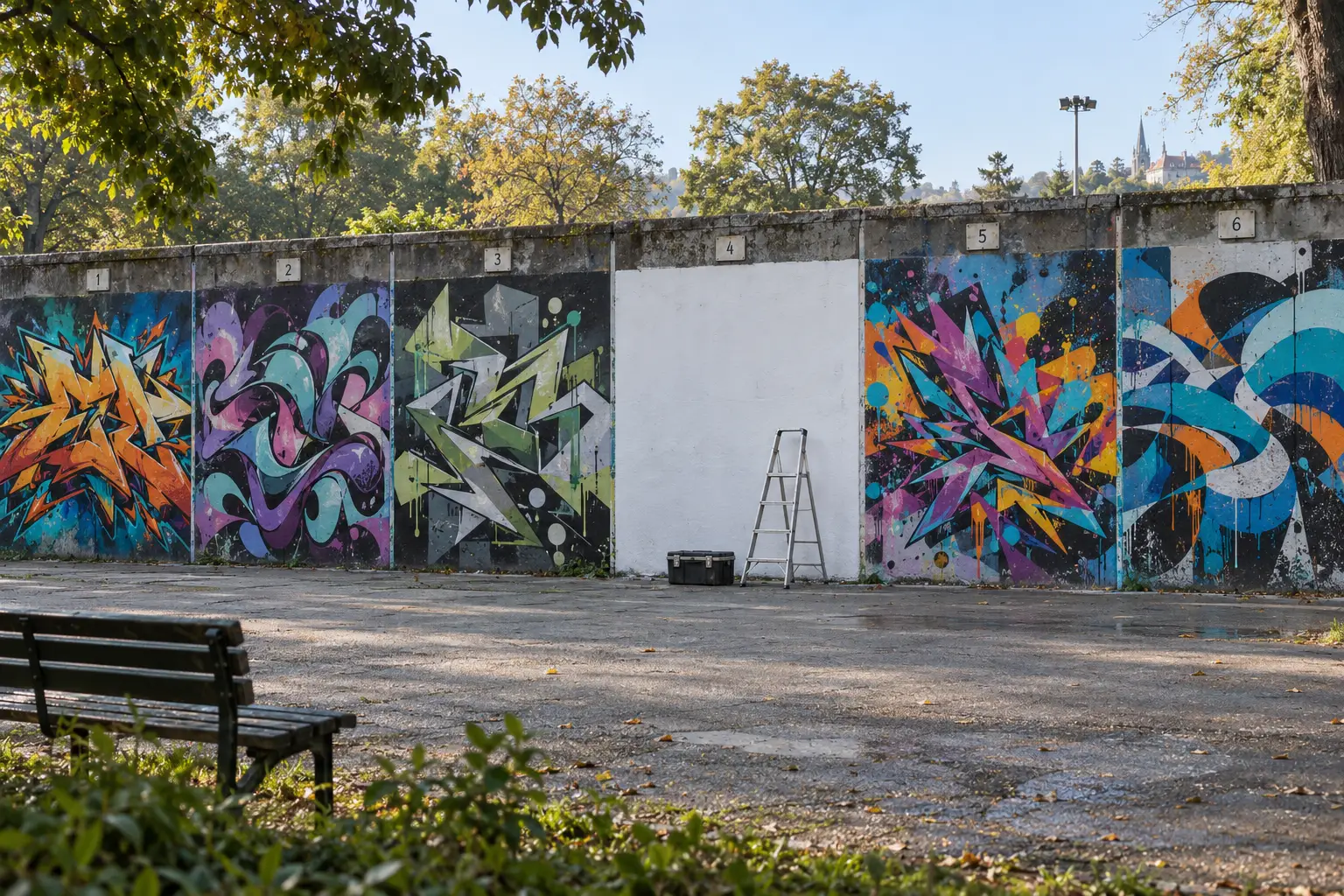
AI illustration: a bookable practice wall, where a booking covers one numbered panel.
These categories can overlap. A city may own an open practice wall, fund commissioned murals elsewhere, and require applications for a third programme. A private owner may approve a mural while local rules still require an additional permit. Conversely, a surface described online as a "hall of fame" may have strong community traditions but no clear formal authorization.
So the useful question is not simply, "Is graffiti legal in this city?" Ask, "Which permission route applies to this exact wall?" That turns a broad search into something the owner or operator can answer clearly.
Why the answer changes from one place to another
The principle of permission is simple; the system around it is not. Property rules, criminal and civil law, planning controls, heritage protection, environmental requirements, and local public-space regulations are written and enforced differently. The consequences of unauthorized painting also vary, including how damage is assessed and which authority deals with it.
Ownership adds another layer. Two similar underpasses may be controlled by different bodies. A city parks department might authorize art on one structure, while a transport agency prohibits it on the next. A tenant may support a mural but lack the power to approve changes to the exterior. On protected or prominent buildings, an owner's consent may be only the first approval required.
Local policy choices shape the opportunities available. One authority may designate open practice surfaces. Another may prefer bookings so it can manage demand and identify who is painting. A third may support street art mainly through commissions, community projects, or grants involving property owners. These approaches can all create legal work, but they do not create the same kind of access.
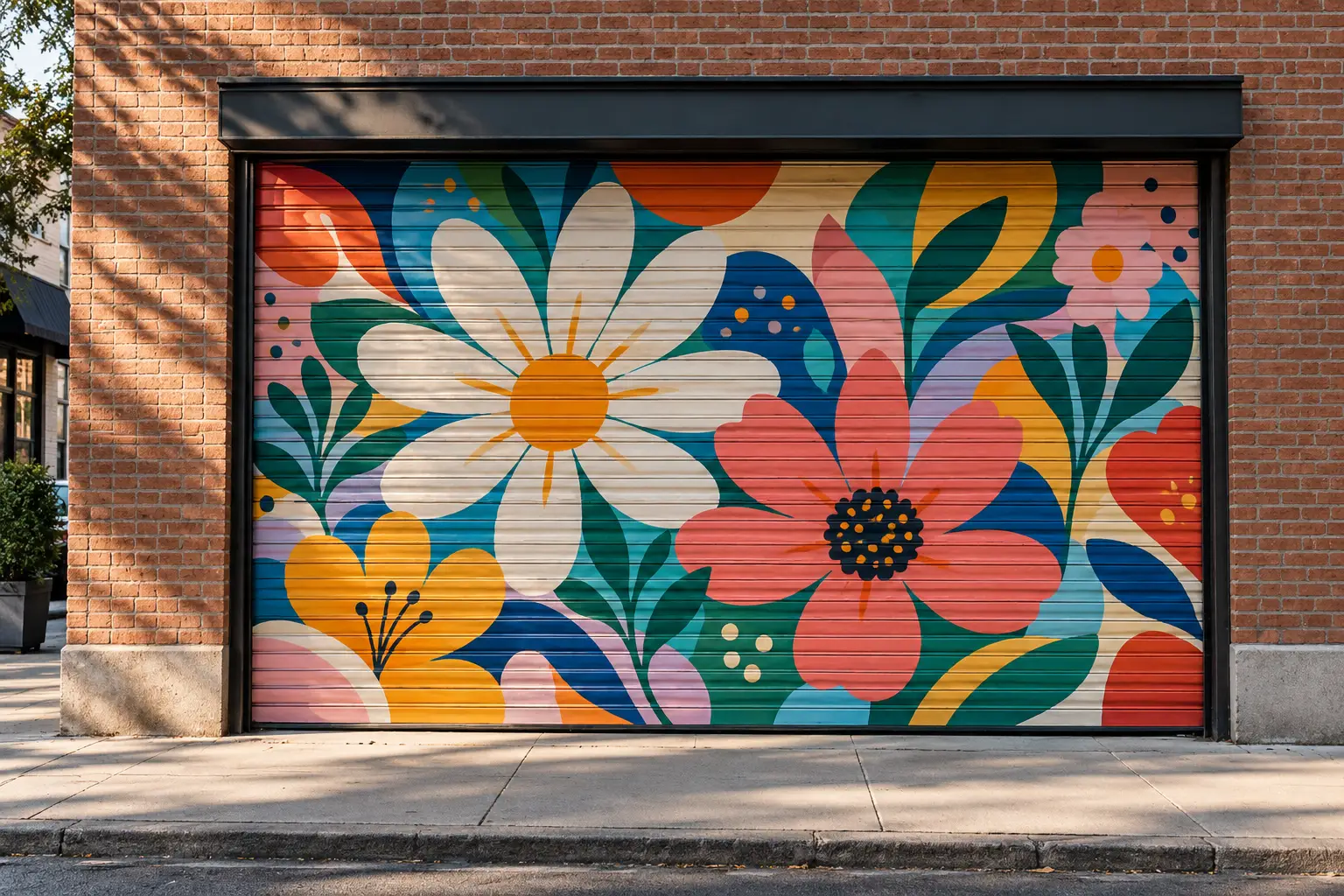
AI illustration: an owner-approved mural covers the shutter, not the wall around it.
Even rules within one programme can reflect the site around it: park opening times, nearby homes, pedestrian routes, traffic, ventilation, events, or temporary construction. Content and cleanup requirements may be imposed by the operator as well as by law.
This is why a worldwide list of countries where "graffiti is legal" would be misleading. Permission usually attaches to a surface and a set of conditions, not to an entire city or nation. The reliable answer is local and specific, even when the broad principle stays the same.
Four real models of a legal wall
Official programmes show how differently permission can work. These examples are patterns, not permanent travel recommendations; always recheck the current page and signs before relying on them.
- Warsaw: signed, open zones. Warsaw's municipal road authority says its FREE GRAFFITI areas are marked by a yellow sign with a blue spray can. The designated areas are available to everyone at any time, but vulgar or discriminatory content is not allowed. The same authority states that painting its other structures is prohibited. Source: zdm.waw.pl
- Vienna: a mapped city network. The City of Vienna's Wienerwand programme uses a dove symbol to mark officially released surfaces and adds them to an online city map. Its current overview says the walls are generally free and usable without advance registration, while opening hours at parks and facilities still apply. It also publishes rules on respectful repainting, waste, advertising, and discriminatory content. Source: presse.wien.gv.at
- Toronto: programmes and property approval. StreetARToronto offers application-based programmes for artists, community organizations, and private property owners. Separately, the City explains that owner-authorized graffiti art or a mural can be submitted for an exemption if it has been mistaken for vandalism. Sources: toronto.ca, toronto.ca
- Inner West: book a particular wall. Inner West Council provides legal graffiti walls at HJ Mahoney Reserve and directs artists to book them through the council. Its published conditions tie approval to the designated wall, approved applicant, and specified period. Source: innerwest.nsw.gov.au
The lesson is not that one model is universally better. It is that "legal wall" may mean walk up and follow the sign, apply to a programme, secure an exemption, or hold a confirmed booking.
What permission usually does and does not cover
Useful permission has edges. A quick "sure, paint the wall" may be enough for a simple private project, but both sides are safer when they understand the same scope. Depending on the setting, authorization may define:
- the exact face, panel, or shutter that can be painted;
- the painter or group covered by the approval;
- the approved date, booking, or working hours;
- permitted paints, primers, fixings, and access equipment;
- any design or content restrictions;
- protection for the ground and neighboring surfaces;
- cleanup, waste removal, maintenance, and repainting;
- whether another permit, check-in, or proof of identity is required.
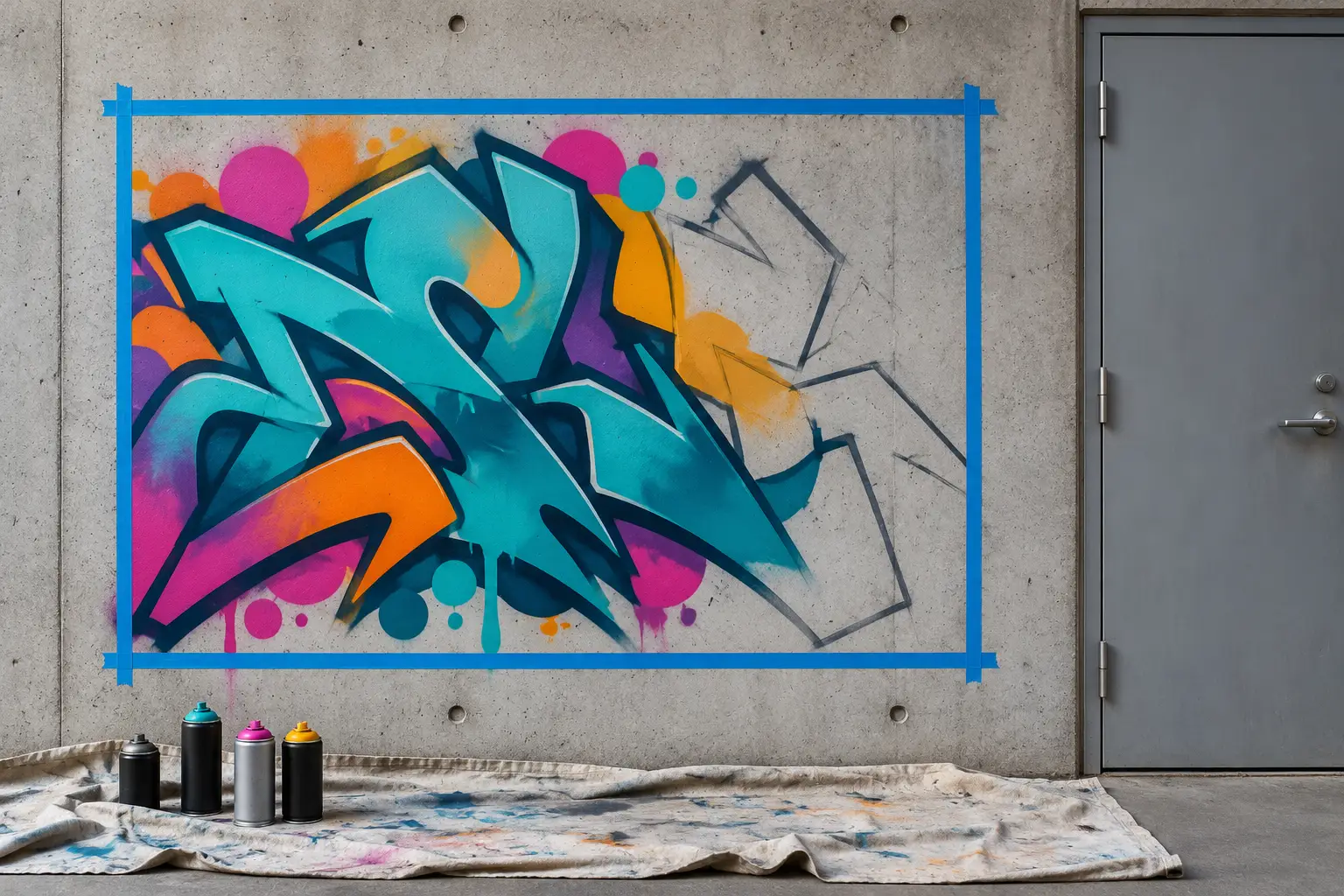
AI illustration: the approved area ends at the tape; the door beside it is not part of the permission.
Anything outside that scope remains outside the permission. A mural approval for a shop wall does not automatically include the pavement or adjoining property. An event pass does not necessarily cover work before or after the event. Approval given to one artist may not extend to friends who arrive later.
Several visual clues are especially unreliable. A wall already covered in paint may contain unauthorized work. An apparently abandoned building still has an owner or controller. An open gate does not grant access, and silence after asking is not consent. Informal tolerance can disappear without notice and is not the same as authorization.
For a private wall, a short written message naming the address, surface, people, date, and agreed work can prevent confusion. For a managed wall, use the operator's published process instead. In both cases, keep the permission available while you paint and stay inside the boundary it actually describes.
How to move from "maybe legal" to a confident yes
A search result is a lead, not permission. Before planning a session, reduce the question to four decisions:
1. Name the exact surface. Identify the wall, panel, or structure rather than relying on a neighborhood pin or a photo of nearby work.
2. Identify who controls it. Look for the owner, municipal department, transport body, venue, or programme authorized to say yes.
3. Find the current permission route. That may be a posted open-wall rule, a booking, an application, a permit, or written approval for a private project.
4. Confirm the boundaries and conditions. Check who may paint, when, where, with which materials, and what access and cleanup rules apply.
If one of those answers is missing or contradictory, wait. Do not substitute existing paint, an old map entry, an unlocked entrance, or a friend's past visit for current authorization. Check signs when you arrive, because a closure, construction project, event, or changed boundary can overtake what you found online.
For a detailed method, use How to Find Graffiti Spots: Legal Walls Near You. It explains how to rank evidence, verify who controls a surface, check the precise scope, inspect conditions on arrival, and recognize reasons to stop. That guide is the practical next step once this broader answer has shown you which kind of permission you are looking for.
The safest summary is also the shortest: paint only the surface you can connect to clear, current authorization. Follow its rules, protect the space around it, and leave no ambiguity about what you were allowed to do.
Frequently asked questions
Is graffiti legal anywhere?
Yes. Graffiti can be legal on a surface where the owner or responsible authority allows it, including designated practice walls, commissioned murals, and approved programmes. The permission and its rules usually apply to a specific surface, not an entire city.
Can I paint a wall if it is already covered in graffiti?
Not on that fact alone. Existing paint may be unauthorized, old, or outside the legal boundary, so confirm the current wall status and permission before adding anything.
Is the owner's permission always enough?
It is the essential starting point for private property, but some projects may also need planning, heritage, building-access, event, or other local approval. Ask the owner or relevant authority which additional rules apply before work begins.
Are legal graffiti walls free to use?
Some designated walls are free and open without individual registration, while others require a booking, application, fee, or participation in a programme. "Legal wall" describes authorized use; it does not promise one universal access policy.
What if police or a city officer stops me at a legal wall?
Stay calm and show what makes your session legal: a photo of the posted wall rules, your booking confirmation or the written permission from the owner. Keep it on your phone or printed before you start, and stay inside the approved surface while you talk. This is general information; follow the instructions of the officer and the local rules.