Autumn is one of the best seasons to paint a legal wall and one of the easiest to get wrong. The light is warm and low, the walls are often quieter, and the colours of the season suit rust, ochre and burgundy palettes. But shorter days, cold surfaces, rain and wet leaves change how paint behaves and how a session should be planned.
This guide covers what autumn does to a wall, how temperature and humidity affect spray paint, how to prepare a surface, and how to work with low light. It is general, practical guidance. The label on your cans and the rules of the wall you paint always come first.
What autumn does to a wall
A legal wall changes long before anyone adds a new piece. In autumn three things happen at once:
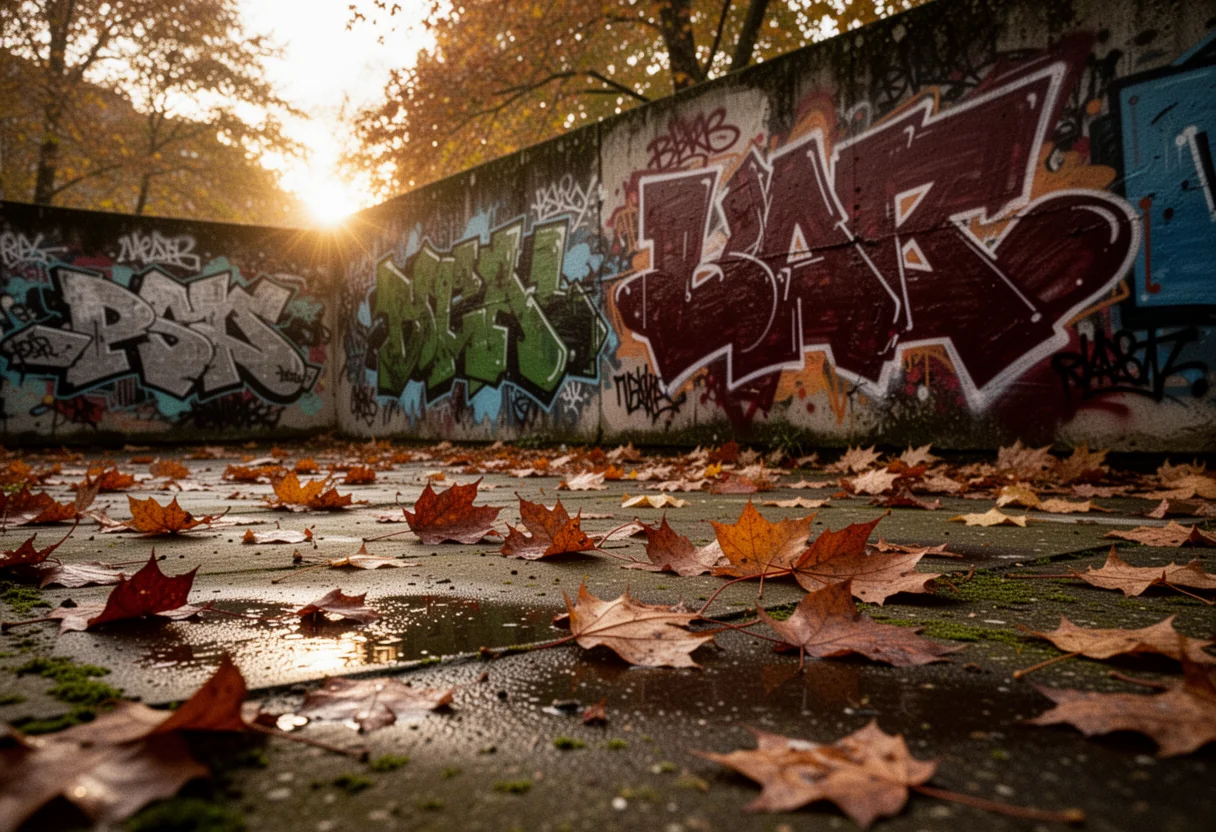
- The light drops. A low sun hits the wall from the side. Texture becomes visible, old pieces look warmer, and colours that seemed flat in summer suddenly have depth.
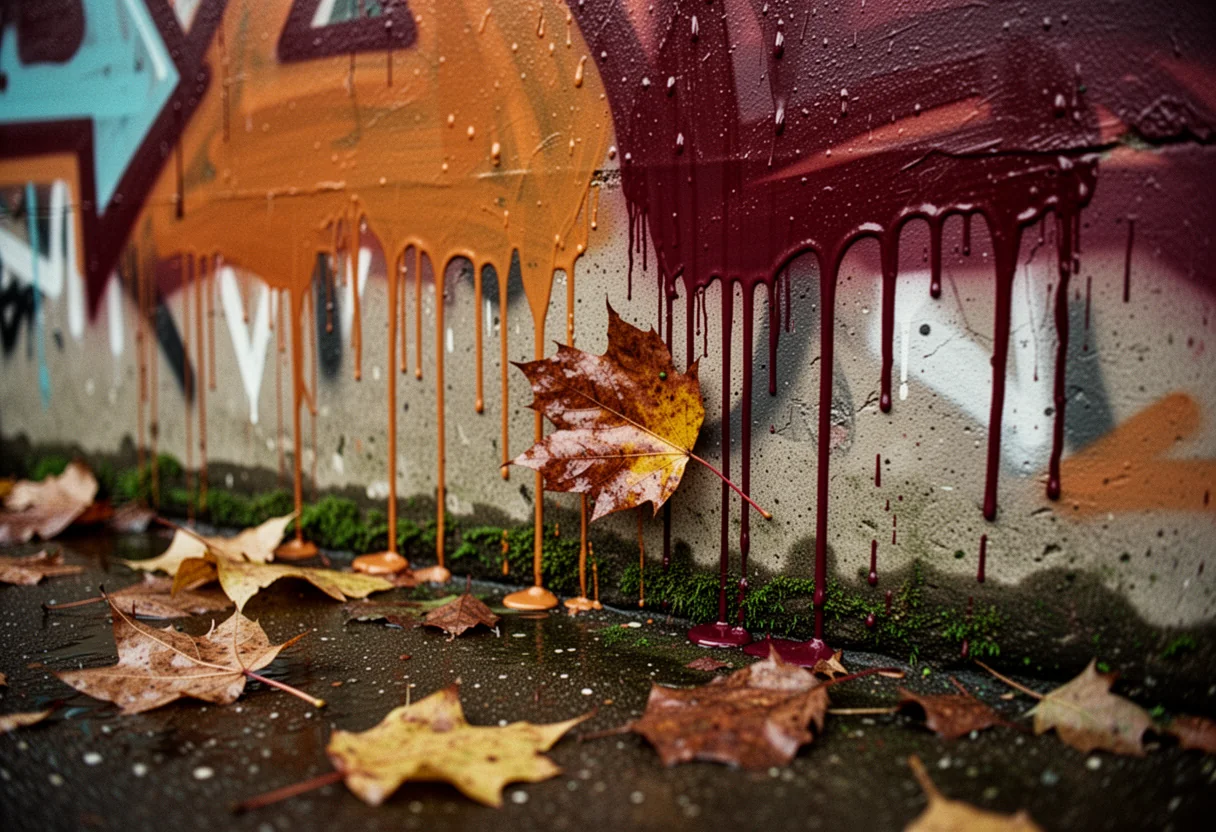
- The surface stays damp. Concrete and brick absorb rain and dry slowly when the air is cool. Morning dew can sit on a wall until midday, even when it is not raining.
- Leaves collect at the base. Fallen leaves hold moisture against the bottom of the wall, stain light colours and hide uneven ground.
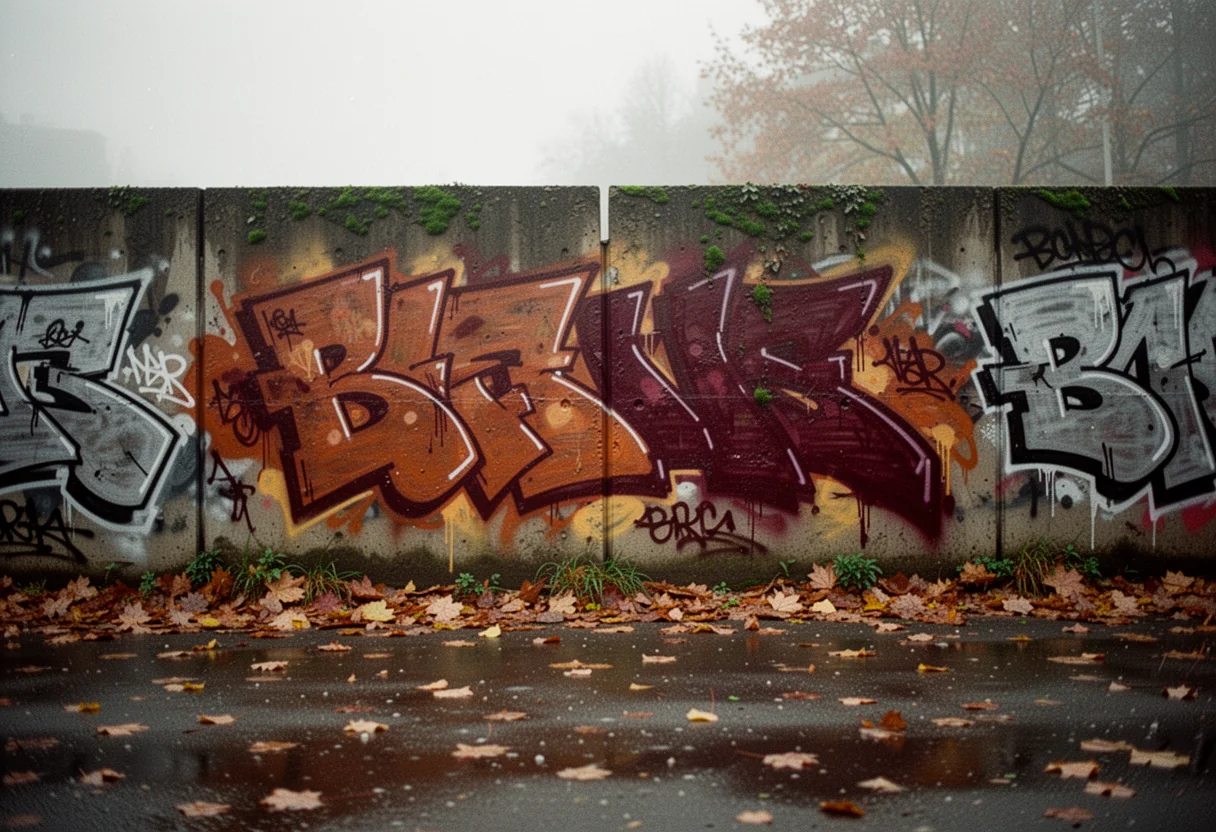
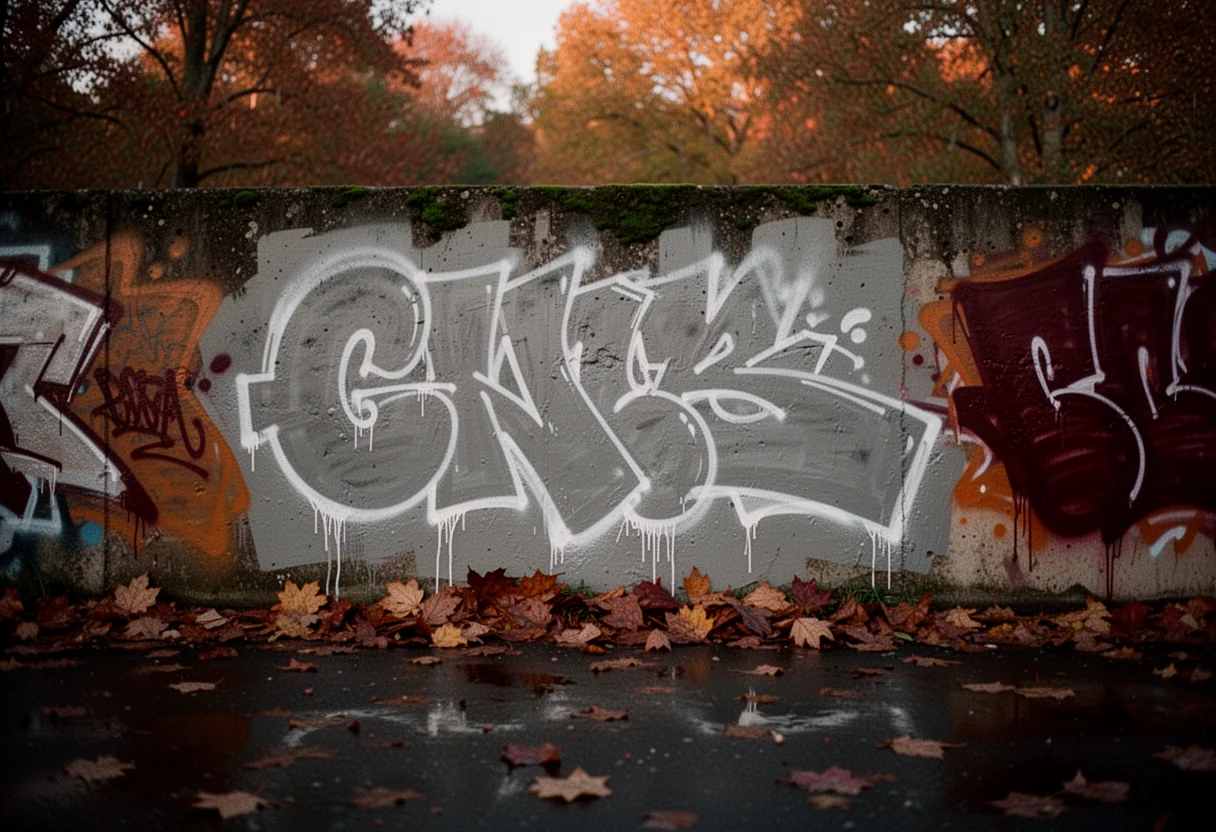
The illustrations below follow one wall through these changes.
Temperature: why cold paint behaves differently
Spray paint depends on pressure and on solvents evaporating at the right speed. Cold slows both.
- Can pressure falls in the cold. The spray becomes weaker and less even, with more spitting and heavier droplets. Keep cans somewhere moderate before the session, for example in a bag rather than a cold car boot. Never warm them with an open flame or a heater.
- Drying takes longer. Layers that dry in minutes on a summer afternoon can stay soft much longer on a cold wall. Fills smear, outlines bleed into wet colour, and drips run further.
- Check the label. Many aerosol paints list a minimum temperature for application, often somewhere around 10 °C for the air and the surface. Below that, adhesion and finish are less predictable.
The wall itself matters as much as the air. A concrete wall in shade can be several degrees colder than the air around it, especially in the morning.
Humidity and dew: the invisible problem
Most autumn failures come from moisture you cannot see.
- Paint on a damp surface does not bond well. It may look fine at first and then peel, blister or flake after the first frosts.
- Dew forms when a surface cools below the dew point. On clear autumn evenings walls cool quickly and condensation appears. A common rule in surface coating is to paint only when the surface is at least about 3 °C above the dew point.
- High humidity slows drying further and can leave a dull, hazy finish on some colours.
A simple check: touch the wall with the back of your hand and wipe it with a dry cloth. If the cloth darkens or the wall feels cold and clammy, wait. Plan sessions for the middle of a dry day, after the morning dew has gone and well before the evening cools the wall again.
Preparing the surface
Autumn is a good time to prepare a wall even when the weather is not good enough for a full piece.
- Clear the base. Sweep leaves away from the area you will paint and from where you will stand. Wet leaves hide holes and are slippery.
- Let the wall dry out. After heavy rain, a porous wall can need more than one dry day before paint adheres well.
- Buff on a dry day. If the wall's rules allow buffing, use exterior-grade paint and give it more drying time than you would in summer. A buff that is still soft underneath will lift with the next layer.
- Sketch first, fill later. Outlines and sketches need less paint and less time. Many writers use short autumn days to buff and sketch, then return for the fill when the forecast allows.
Always follow the wall's own rules about buffing, covering other work and time limits. The guide to finding and verifying legal graffiti spots covers permission in detail.
Working with low light
Autumn days are short. A session that starts after work may end in darkness.
- Plan around daylight. Check sunset time before you leave and allow time to pack up, clean the area and take photos.
- Use the low sun. Late afternoon light from the side shows texture and makes warm colours glow. It is the best light for photos of a finished piece.
- Use overcast light for colour checks. Flat, grey light shows colours closer to how they really are. If a colour looks right only in golden sun, it may look muddy on a grey day.
- Bring a light for packing up, not for painting. Colours mixed under a headlamp rarely match in daylight.
Photographing your piece in autumn
A piece on a legal wall may be painted over within days. Good photos are its record.
- Shoot the wall straight on for documentation, and from an angle in low light for atmosphere.
- Include the season on purpose: leaves at the base, wet concrete reflecting the colours, mist behind the wall.
- Avoid shooting while the paint is wet if the surface is shiny. Reflections hide detail and change colours.
- Do not photograph people without their permission, especially other writers who may not want to be identified.
Safety in autumn
- Wet leaves and moss are slippery, especially on ramps, steps and around ladders. Clear your footing before you climb.
- Ladders need dry, level ground. Soft, waterlogged soil and leaf cover can make a ladder shift.
- Cold hands are clumsy. Thin gloves protect your hands from paint and cold and keep your control on the nozzle.
- Keep your mask on. Outdoor air does not remove the need for respiratory protection when spraying.
- Leave the spot clean. Empty cans, caps and rags hidden under leaves are easy to forget and harm the reputation of the wall.
A short autumn checklist
1. Forecast: a dry day, ideally after a dry day.
2. Temperature: air and wall within the range on your cans.
3. Surface: dry to the touch and above the dew point.
4. Light: enough daylight for painting, cleaning up and photos.
5. Prep: base swept, buff dry, sketch planned.
6. Safety: footing cleared, gloves and mask packed.
7. Rules: the wall's own rules checked before you start.
Autumn rewards patience. A wall prepared on one dry day and painted on the next will hold its colours far better than a rushed session on a damp evening.